Modeling PARP10 Orange Clay Guideline
| Instructions on Application of Rapid Prototyping Modeling Resin, Modeling PARP10 Orange Clay | ||
|---|---|---|
| Product Department - Product Application Engineering Team | Publish date: 7/15/2024 | Version: V1.0 |
¶ 1. Material Information
¶ 1.1 Overview
Modeling PARP10 Orange Clay is a red wax material of HeyGears Rapid Prototyping Modeling Resin. It features fair hardness, detail reproduction and high construction performance, ideal for creating figures and their accessories like anime and game characters, as well as applications in the jewelry industry. Additionally, it boasts excellent aging resistance (passed in various mainstream aging tests).
¶ 1.2 Recommendations on Applications
Military models, model cars, scale models, jewelry molds, anime and game figures that requires high reproduction ability, validation of appearance prototypes, and other scenarios demanding in surface quality.
¶ 1.3 Performance
| Basic Properties of Modeling PARP10 Orange Clay | |||
| Categories | Properties | Criteria | Value |
| Rigidity | Tensile Strength (MPa) | ASTM D638 | 54 |
| Flexural Strength (MPa) | ASTM D790 | 80 | |
| Flexural Modulus (MPa) | ASTM D790 | 1831 | |
| Toughness | Elongation at Break (%) | ASTM D638 | 15 |
| Impact Strength (Notched) (J/m) | ASTM D256 | 34 | |
| Essential Work of Fracture (J/m²) | ISO 20795 | 3350 | |
| Heat resistance | Heat deflection temperature (0.45Mpa) (℃) | ASTM D648 | 52 |
| Mechanical | Shore D Hardness | ASTM D256 | 84 |
| Viscosity (mPa·s) | ASTM D792 | 320 | |
| Water Sorption (%) | ASTM D570 | 1.02 | |
Note: The properties were obtained from printed objects after dry curing for 5 min in Performance mode in HeyGears UltraCraft Cure curing machine.
¶ Design Suggestions
¶ 2.1 Design Parameters for Minimum Construction Performance
| Construction performance | ||
| Items | Pulsing Release Resin Tank | Resin tank (regular) |
| Gap width (mm) | 0.15 | 0.2 |
| Overhang length (mm) | 1.4 | 1.0 |
| No support offset (°) | 20 | 25 |
| Wall thickness (mm) | With baffle: 0.2 No baffle: 0.22 |
With baffle: 0.18 No baffle: 0.18 |
| Hole diameter (mm) | 0.4 | 0.3 |
| Pillar diameter (mm) | 0.4 | 0.4 |
Note: The table presents the design requirements to guarantee at least the minimum construction performance of the material. Design parameters below them would lead to detail missing or print failure.
¶ 2.2 Recommended Design Parameters
Design parameters are recommended below for various kinds of structures which guarantee the printing success rate.
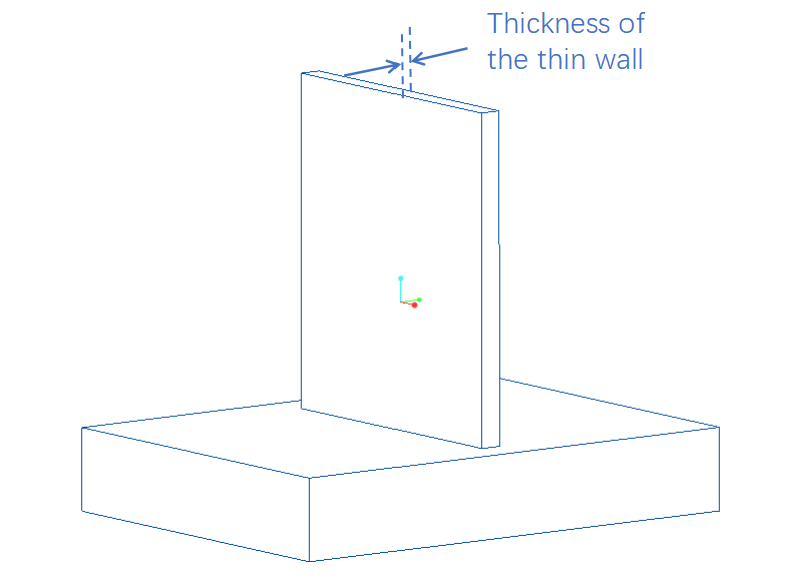
¶ 2.2.1 Thickness of Thin Wall Structures
|
|||||
| Recommended values | |||||
| Thin wall area (mm²) | 5*5 | 10*10 | 50*50 | 100*100 | 200*200 |
| Min. thickness of wall that provides support (mm) | 0.3 | 0.35 | 0.8 | 1.2 | 1.4 |
| Min. thickness of wall that does not provide support (mm) | 0.3 | 0.35 | 1.0 | 1.4 | 1.6 |
| Typical scenarios: |
1.Construction parts and shells of consumer electronics; 2.Thin walls on figures. |
||||
| Testing method by HeyGears: |
1.The test was finished within 2 hours after part removal and washing; 2.The printed object was visually inspected, from the thinnest to the thickest areas, whether it was intact with no obvious deformation or misalign lines. 3.The minimum data that passed the testing was recorded. |
||||
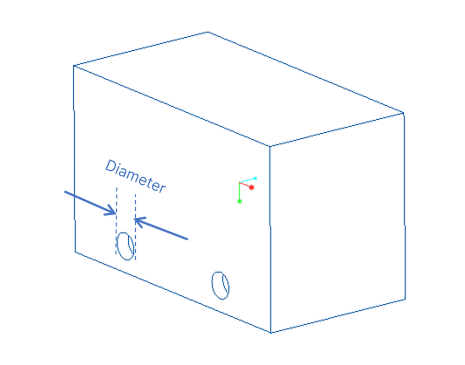
¶ 2.2.2 Hole
|
|||||
| Hole types: | Straight, bent, blind | ||||
| Hole depth (mm) | 2 | 10 | 30 | 40 | 50 |
| Min. inner diameter of straight hole (mm) | 0.4 | 0.4 | 0.4 | 0.4 | 0.4 |
| Min. inner diameter of bent hole (mm) | 0.4 | 0.4 | 0.6 | 0.6 | 0.8 |
| Min. inner diameter of blind hole (mm) | 0.4 | 0.4 | 0.6 | 0.4 | 0.6 |
| Typical scenarios: |
1.Sound holes on earphones, charging holes; 2.Small tubes, details on figures; 3.Industrial assembly parts. |
||||
| Testing method by HeyGears: |
1.All holes were completely cleaned (washed and dried for about 3~5 times); 2.Straight holes: HeyGears team directed the light source at the holes from one end, inspected at the other end if the light could be seen, and recorded the minimum data that passed the test; 3.Blind holes: HeyGears team pointed a wire through the holes to see if it can reach the bottom (the other end), and recorded the minimum data that passed the test; 4.Bent holes: HeyGears team blew in the holes from one end with an air blow gun or an injector, inspected if the holes were ventilated, and recorded the minimum data that passed the test. |
||||
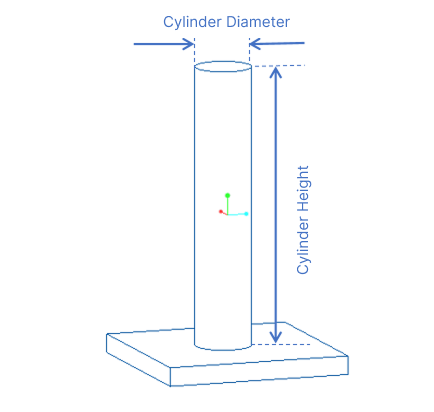
¶ 2.2.3 Pillar
|
|||||
| Pillar types: | Pillars providing support and not providing support | ||||
| Depth/Height (mm) | 7 | 10 | 20 | 40 | 50 |
| Min. diameter of pillar providing support (mm) | 0.5 | 0.6 | 0.8 | 1.0 | 1.2 |
| Min. diameter of pillar not providing support (mm) | 0.5 | 0.5 | 0.7 | 0.8 | 0.9 |
| Typical scenarios: |
1.Positioning pins, connection of assembly parts; 2.Details, tubes, fingers; 3.Thin long structures like combs and needles. |
||||
| Testing method by HeyGears: |
1.The test was finished within 2 hours after part removal, washing and curing; 2.The printed object was visually inspected to see if it was intact with no obvious deformation or misalign lines; 3.The minimum data that passed the test was recorded. |
||||
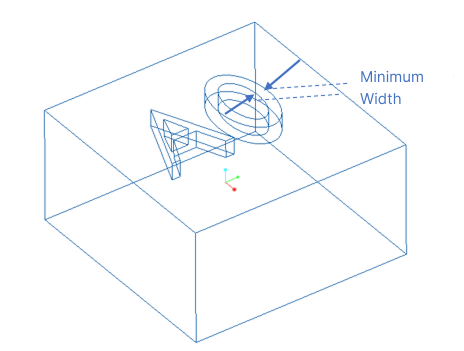
¶ 2.2.4 Width of Raised & Depressed Details
|
|||||
| Types: | Raised and depressed | ||||
| Depth (mm) | 0.3 | ||||
| Min. width of depressed details (mm) | 0.2 | ||||
| Min. width of raised details (mm) | 0.08 | ||||
| Typical scenarios: |
1.Tagged text; 2.Special texture. |
||||
| Testing method by HeyGears: |
1.The test was finished after part removal, washing and curing; 2.The printed object was visually inspected to see if the details were intact and clear with no obvious missing; 3.The minimum data that passed the test was recorded. |
||||
¶ 2.2.5 Drain Hole
|
|||||
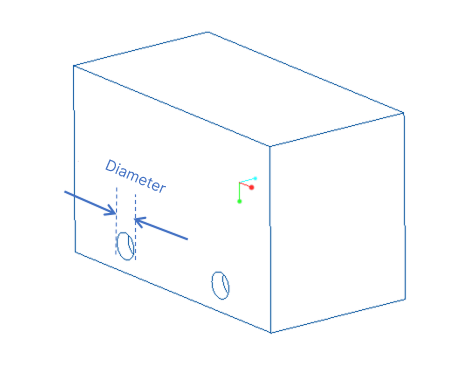
| Types: | Any type of drain holes in hollowed structures | ||||
| Size of the area to add drain holes (mm²) | 10*10 | 20*20 | 30*30 | ||
| Min. diameter of drain hole (mm) | 0.6 | 1.5 | 2.0 | ||
| Typical scenarios: | 1.Drain holes of hollowed structures. | ||||
| Testing method by HeyGears: |
1.During washing, the printed object was washed and blown dry for 5 times for testing; 2.The holes were visually inspected to see if they had been cleaned completely with no resin or misalign lines; 3.The minimum data that passed the test was recorded. Note: Only resin materials whose viscosity were 200, 1000, 3000 mPa·s needed testing. |
||||
¶ 2.2.6 Acute Angle
|
|||||
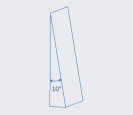
| Types: | Acute parts of various wall thickness | ||||
| Wall thickness (mm) | 1 | 2 | 3 | 4 | 5 |
| Smallest acute angle (°) | 10 | 10 | 10 | 10 | 10 |
| Typical scenarios: | 1. Acute parts | ||||
| Testing method by HeyGears: |
1. The test was finished within 2 hours after part removal and washing; 2. The printed object was visually inspected to see if the acute parts were intact with no obvious deformation or misalign lines; 3. The minimum data that passed the test was recorded. |
||||
¶ 2.2.7 Gap
|
|||||
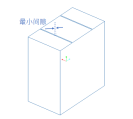
| Types: | Gaps between curved parts and gaps between flat parts | ||||
| Depth/Height of curved part (mm) | 5 | 10 | 15 | 20 | 25 |
| Min. gap width (mm) | 0.20 | 0.20 | 0.20 | 0.20 | 0.25 |
| Depth/Height of flat part (mm) | 10 | 15 | 20 | 30 | 50 |
| Min. gap width (mm) | 0.35 | 0.2 | 0.35 | 0.35 | 0.35 |
| Typical scenarios: |
1.One-piece structure (gears, architecture miniatures) 2.Details on surface, texture structures |
||||
| Testing method by HeyGears: |
1.The test was finished within 2 hours after part removal and washing; 2.Printed connection parts were visually inspected to see if they could be separated intactly. 3.The minimum data that passed the test was recorded. |
||||
¶ 2.3 Gap in Connections
|
Gap in Connections
|
|||||
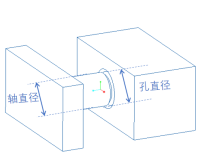
| Types | Fit, tight, loose | ||||
| Images | Shapes | Tight (mm) | Fit (mm) | Loose (mm) | |

|
Square | <-0.02 | -0.01 | >0 | |

|
Circle | <-0.02 | 0 | >0 | |

|
Ball | <0.04 | 0.04 | >0.04 | |

|
Polygonal | <0.02 | 0.03 | >0.04 | |

|
C-shaped/U-shaped | <0 | 0.02 | >0.02 | |
| Testing method by HeyGears: |
1. Test was done after part removal, washing and curing. 2. Column-shaped connection structures were taken out from the sprue. 3. The structures were assembled, from the loosest ones to the tightest ones (the order might differ due to subjective thoughts); 4. Data was recorded according to the assembly results. |
||||
¶ 2.4 Tolerance
|
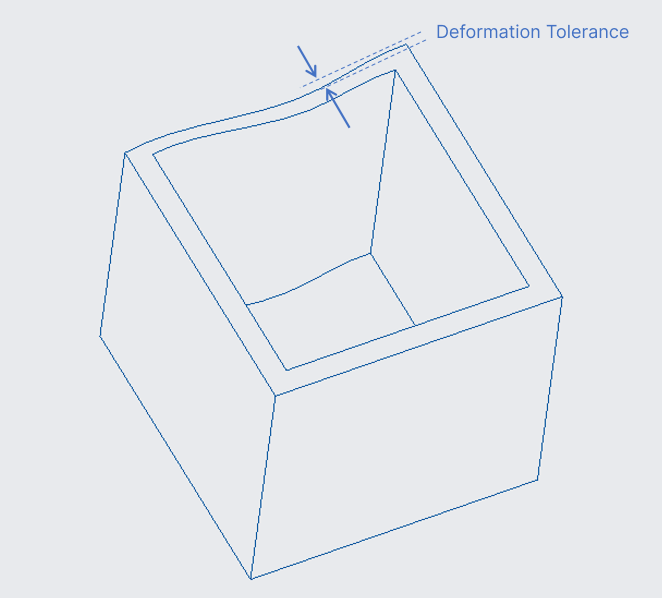
Printed dimensions and tolerances |
|
||||
| Types: | Any structure | ||||
| Max. values among dimensions of a printed object (mm) | 20 | 50 | 100 | ||
| Tolerances (mm) | ±0.05 | ±0.10 | ±0.20 | ||
| Testing method by HeyGears: |
1.Thin walls or other special structures were not considered; 2.Measurement was done within 2 hours after part removal, washing and curing; 3.Printing parameters were the same when using Pulsing Release Resin Tank and using regular resin tank. |
||||
¶ 3. Process and Configuration
¶ 3.1 Support parameters
| Support parameters (regular resin tank) | ||
| Support areas | Parameter items | Parameter values |
| Support body | Lift height (mm) | 5 |
| Trunk diameter (mm) | 0.7 | |
| Overhang angle (°) | 40 | |
| Support density | Anchor distance (mm) | 2.0 |
| Border anchor distance (mm) | 2.0 | |
| Connection | Top diameter (mm) | 0.28 |
| Connection length (mm) | 1.5 | |
| Contact | Contact shape | Sphere |
| Diameter (mm) | 0.38 | |
| Embedded depth (mm) | 0.2 | |
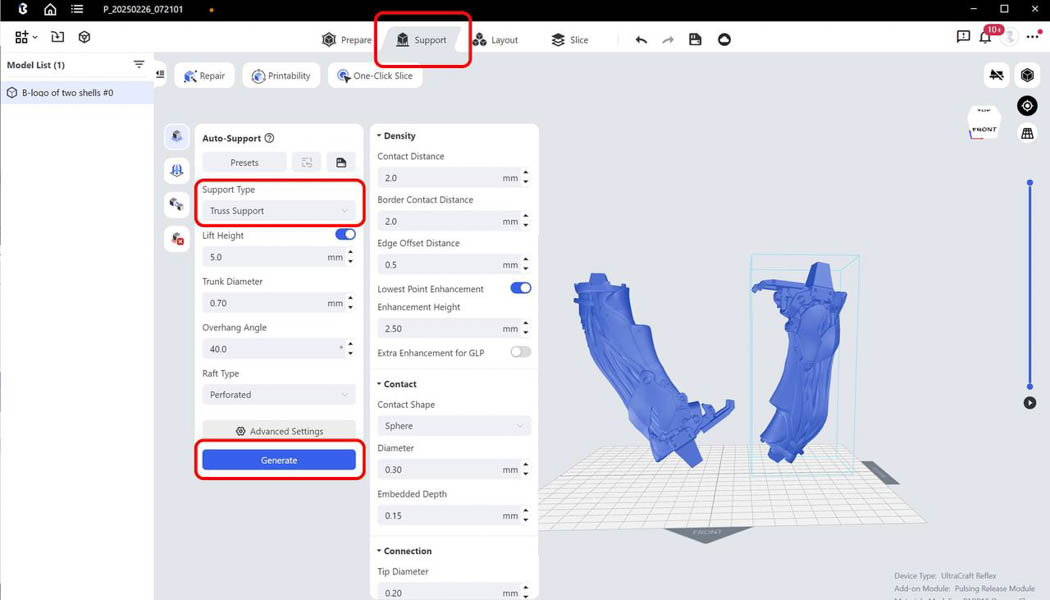
Notes: When printing an object from Modeling PARP10 Orange Clay with a regular resin tank for the first time, it’s advised not to adjust the support parameters, for a better printing success rate. Sufficient supports are needed on areas such as lowest points and islands, considering the center of gravity shifting during the process of printing, which might cause the object to shake and lead to misalignment. Appropriate improvements might be done on support parameters after the first print is successfully finished.
| Support parameters (Pulsing Release Resin Tank) | |||
| Support areas | Parameter items | Default parameters | Min. parameters |
| Support body | Lift height (mm) | 5 | 5 |
| Trunk diameter (mm) | 0.7 | 0.65 | |
| Overhang angle (°) | 40 | 35 | |
| Support density | Anchor distance (mm) | 2.0 | 2.5 |
| Border anchor distance (mm) | 2.0 | 2.5 | |
| Connection | Top diameter (mm) | 0.2 | 0.2 |
| Connection length (mm) | 1.5 | 1.5 | |
| Contact | Contact shape | Sphere | Sphere |
| Diameter (mm) | 0.30 | 0.25 | |
| Embedded depth (mm) | 0.15 | 0.15 | |
Notes: Using a Pulsing Release Resin Tank when printing an object from Modeling PARP10 Orange Clay can hugely decrease the peeling force and improve the success rate of printing. Supports can be 30% less compared with those using a regular resin tank. But support parameter values are advised not to be weaker than the min. parameters provided above, or there will be some printing risks.
¶ 3.2 Parameters for Slicing in Other Slicer Software (Not Recommended)
| Chitubox (printing with regular resin tank) | ||
| Support areas | Parameter items | Parameter values |
| Basic config. | Z lift height (mm) | 5 |
| Raft shape | Cross grid | |
| Raft thickness (mm) | 1.0 | |
| Overhang angle (°) | 45 | |
| Support density | Anchor distance (mm) | 2.0 |
| Connection | Top diameter (mm) | 0.3 |
| Length (mm) | 15 | |
| Trunk diameter(mm) | 0.95 | |
| Contact | Shape | Sphere |
| Diameter (mm) | 0.4 | |
| Embedded depth (mm) | 0.2 | |
| Voxeldance Tango (printing with regular resin tank) | ||
| Support areas | Parameter items | Parameter values |
| Basic config. | Z lift height (mm) | 5 |
| Raft shape | Convex hull | |
| Raft thickness (mm) | 1.0 | |
| Overhang angle (°) | 45 | |
| Support density | Anchor distance (mm) | 2.0 |
| Connection | Top diameter (mm) | 0.3 |
| Length (mm) | 15 | |
| Trunk diameter(mm) | 0.95 | |
| Contact | Shape | Sphere |
| Diameter (mm) | 0.4 | |
| Embedded depth (mm) | 0.2 | |
Note: It's advised to use a “safer” parameter configurations and have some tests first, as HeyGears printers cannot guarantee a high printing success rate for models sliced with a third-party slicer software which does not enjoy HeyGears print strategies.
¶ 3.3 Washing Settings
| Material Cleaning Parameters | ||||
| Material | Cleaning device | Recommended process Settings | Washing agent | Washing time |
| PARP10 Orange Clay | HeyGears UltraCraft Wash | Rotation speed 180r/min | 95% alcohol/IPA | 2min rough wash + 2min fine wash |
| Ultrasonic cleaner | Power 240Kw | 95% alcohol/IPA | 2min rough wash + 2min fine wash | |
Note 1: Rough wash refers to the behavior of washing off most liquid resin on the printed object with used alcohol (used for more than 3 batches of prints); Fine wash refers to the behavior of well cleaning details of the printed object with clean alcohol (used for less than 3 batches of prints).
Note 2: Washing finished, it's advised to blow dry the print with compressed air or bake it dry in a baker at 50℃ for 10min. Please AVOID submerging the print in alcohol for long time (over 10 min in total), which might impact the resin's performance and the print's dimension.
¶ 3.4 Curing Settings
| Material Curing Parameters | ||||
| Material | Curing mode | Heat or not | Curing medium | Curing settings |
| PARP10 Orange Clay | UltraCraft Cure | No | Air | Room temp. for 5 min |
Note: Cure the print with HeyGears UltraCraft Cure. It’s advised to send the curing job from HeyGears Blueprint to the device first and then start curing on the device, as the job sent from Blueprint would enjoy a more advanced curing process and have an even better curing result.
¶ 4. Operation Steps
¶ 4.1 Slicing in Blueprint Studio
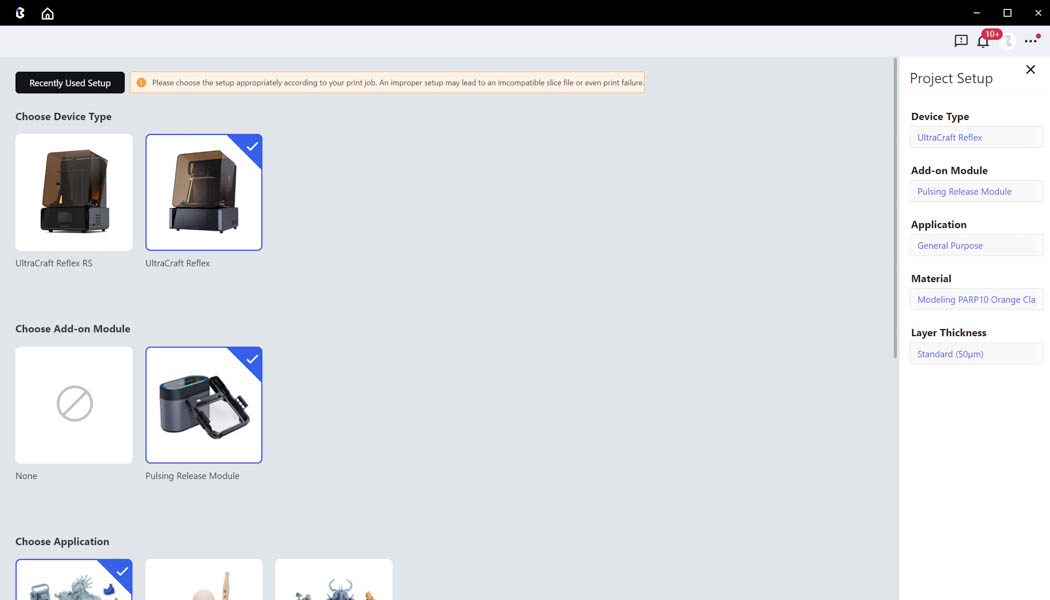
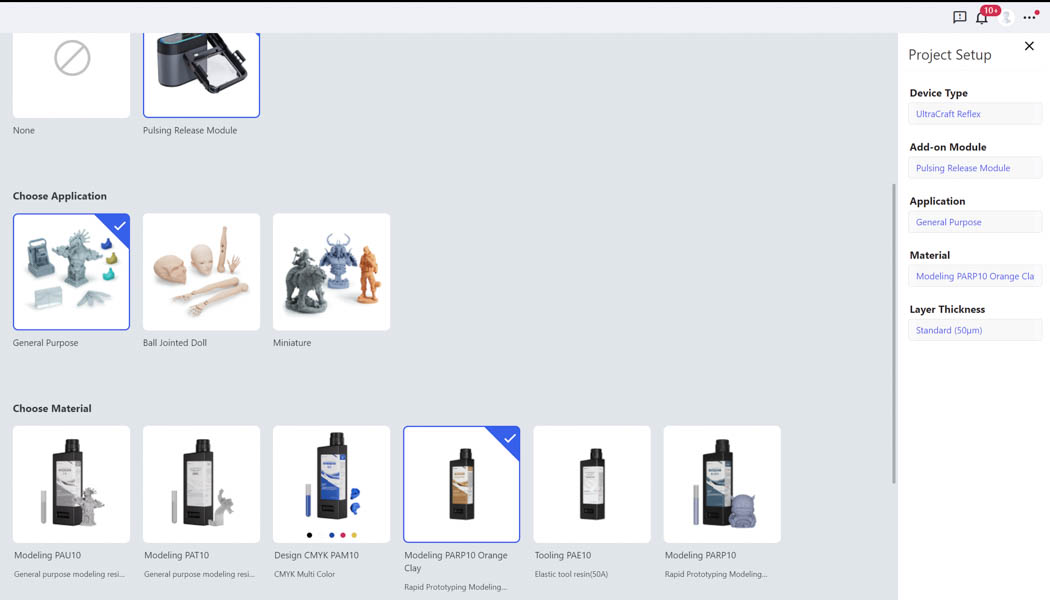
| Step 1: Enter Slicer in Blueprint Studio. | Step 2: Choose Modeling PARP10 Orange Clay. |
 |
 |
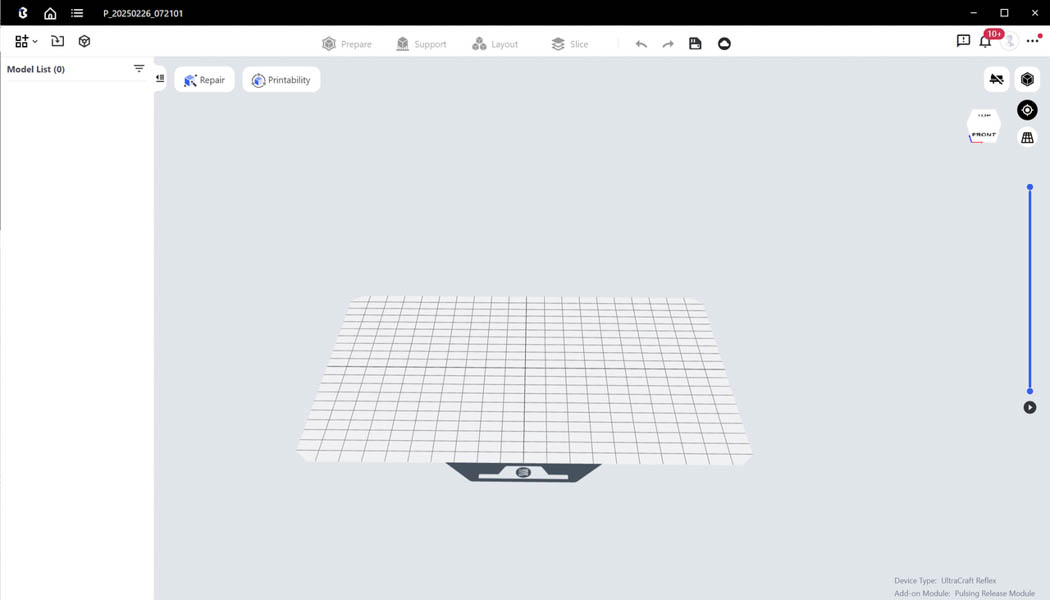
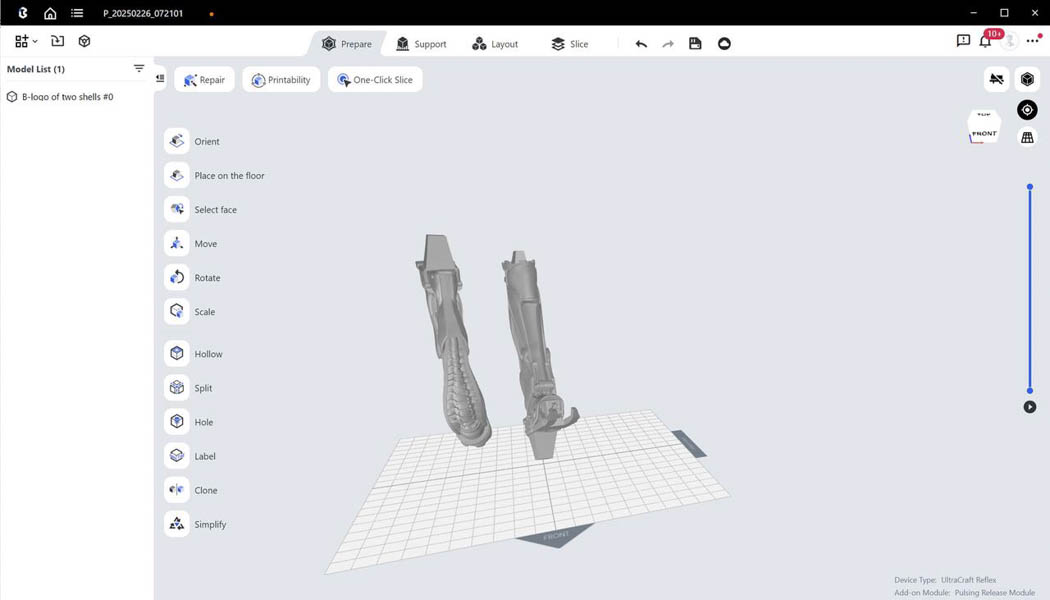
| Step 3: Import models in a new project by clicking Import icon or directly dragging models to the Studio. | Step 4: In the Prepare page, use Rotate, Scale, Hollow, Hole, Label, Duplicate and other tools based on your needs. |
 |
 |
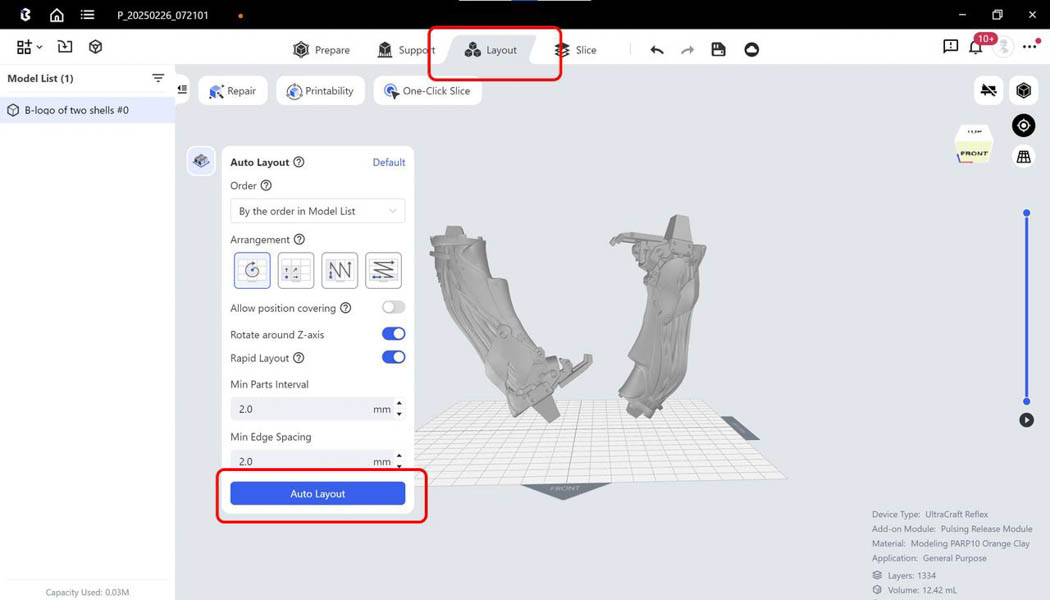
| Step 5: Run Auto-layout. | Step 6: Run Auto-support, choose Truss support and generate supports. |
 |
 |
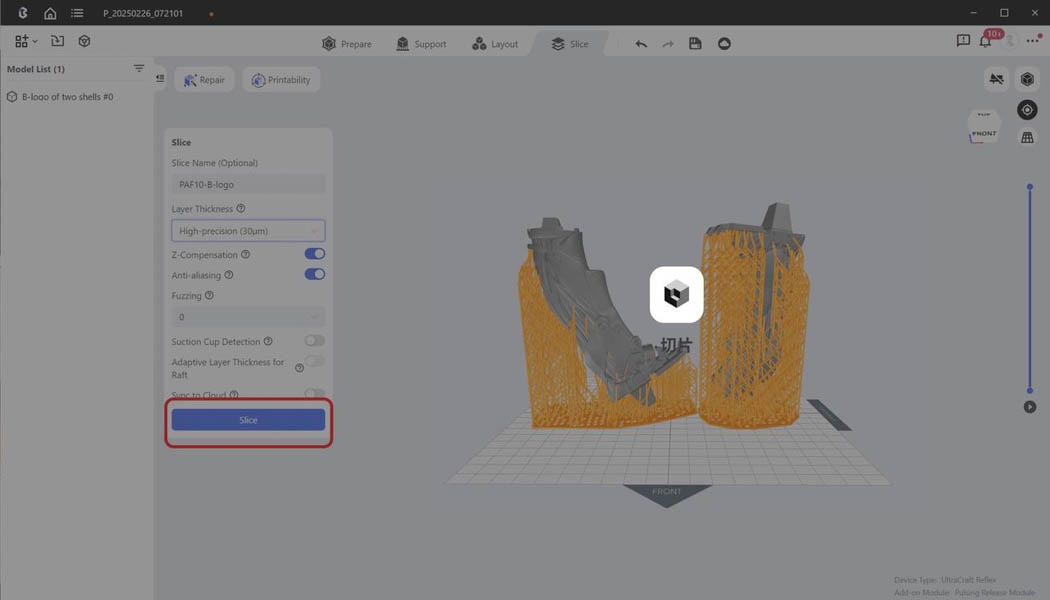
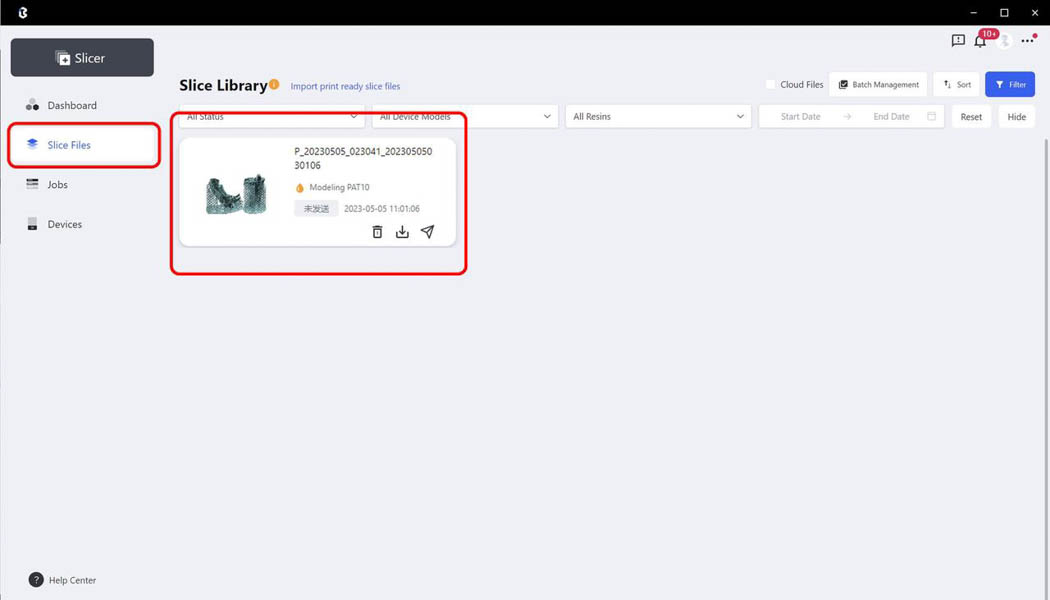
| Step 7: Run Slicing. You may edit the slice file name if needed. | Step 8: After slicing is done, you may check the slice file and send the print job at [Slice Files] page |
 |
 |
¶ 4.2 Print and Post-processing
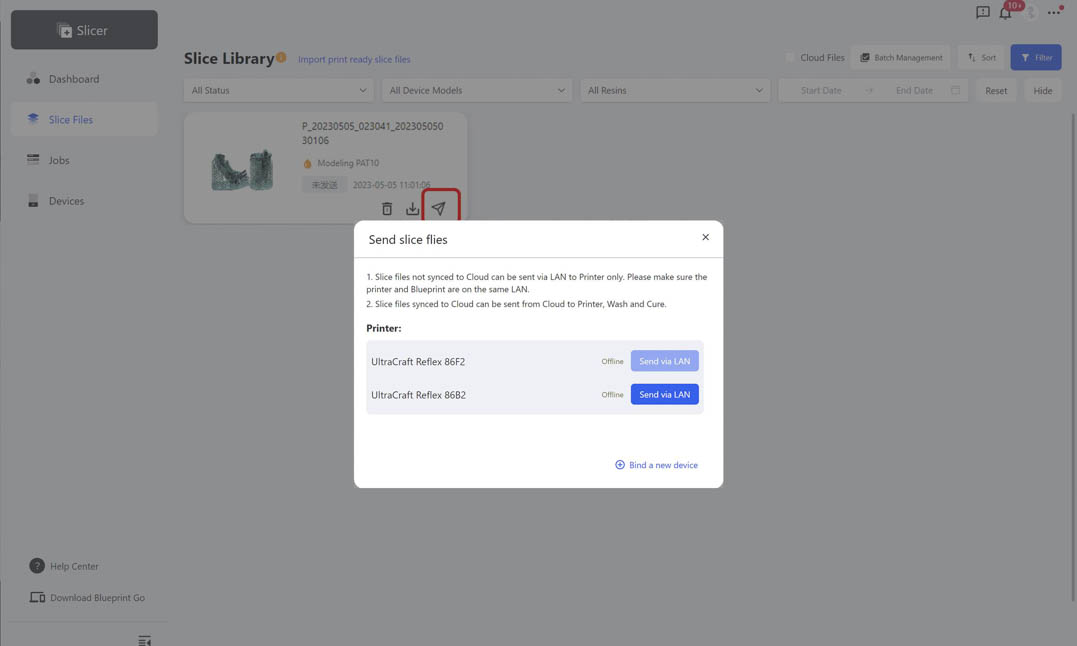
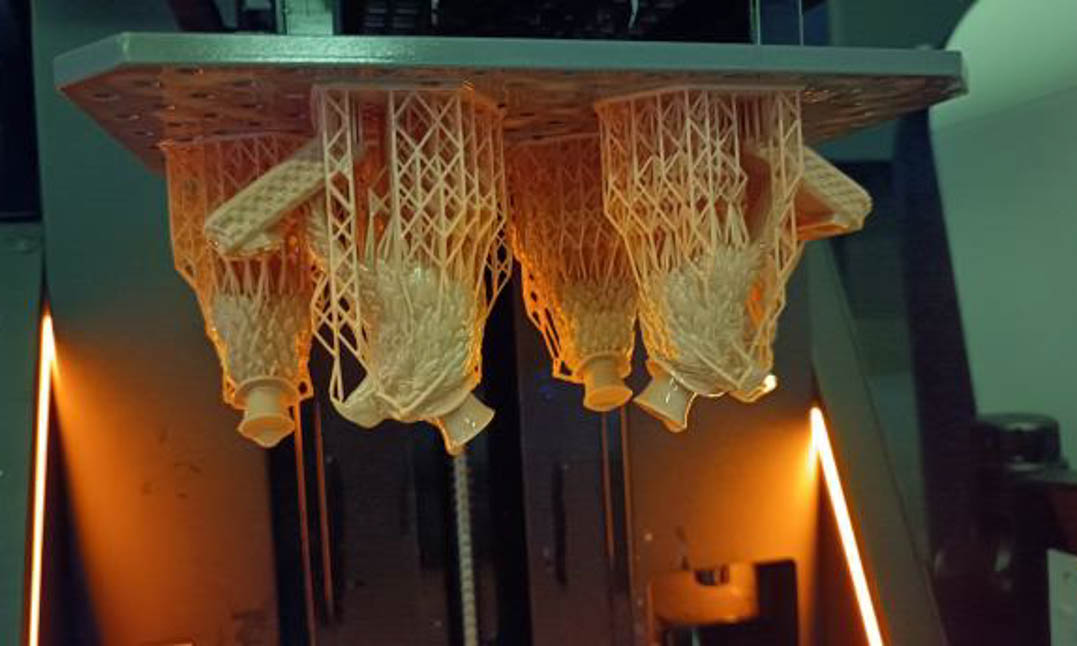
| Step 1: Send the slice file to your printer in any Blueprint platform, or import it to your printer via USB flash drive. | Step 2: Printing. |
 |
 |
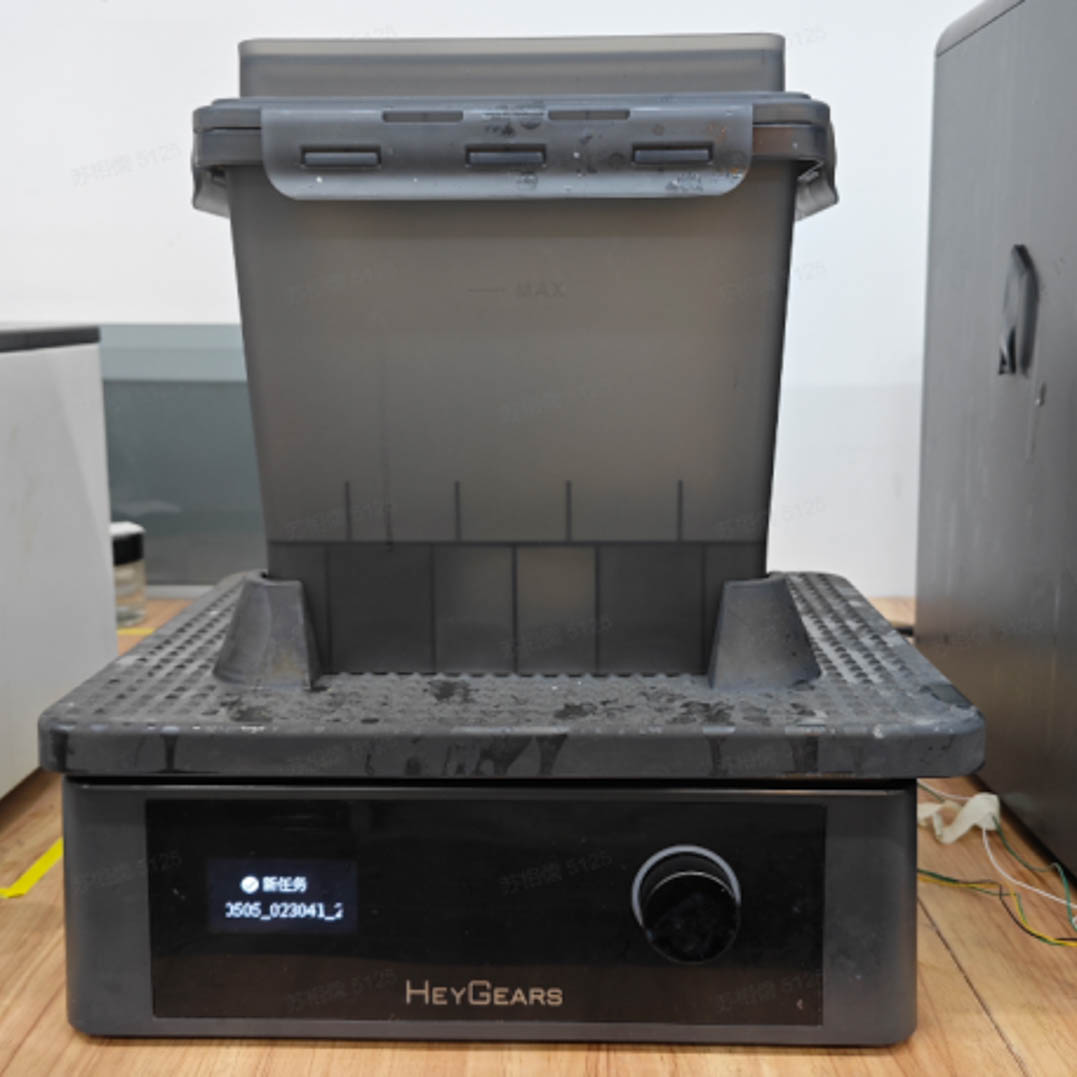
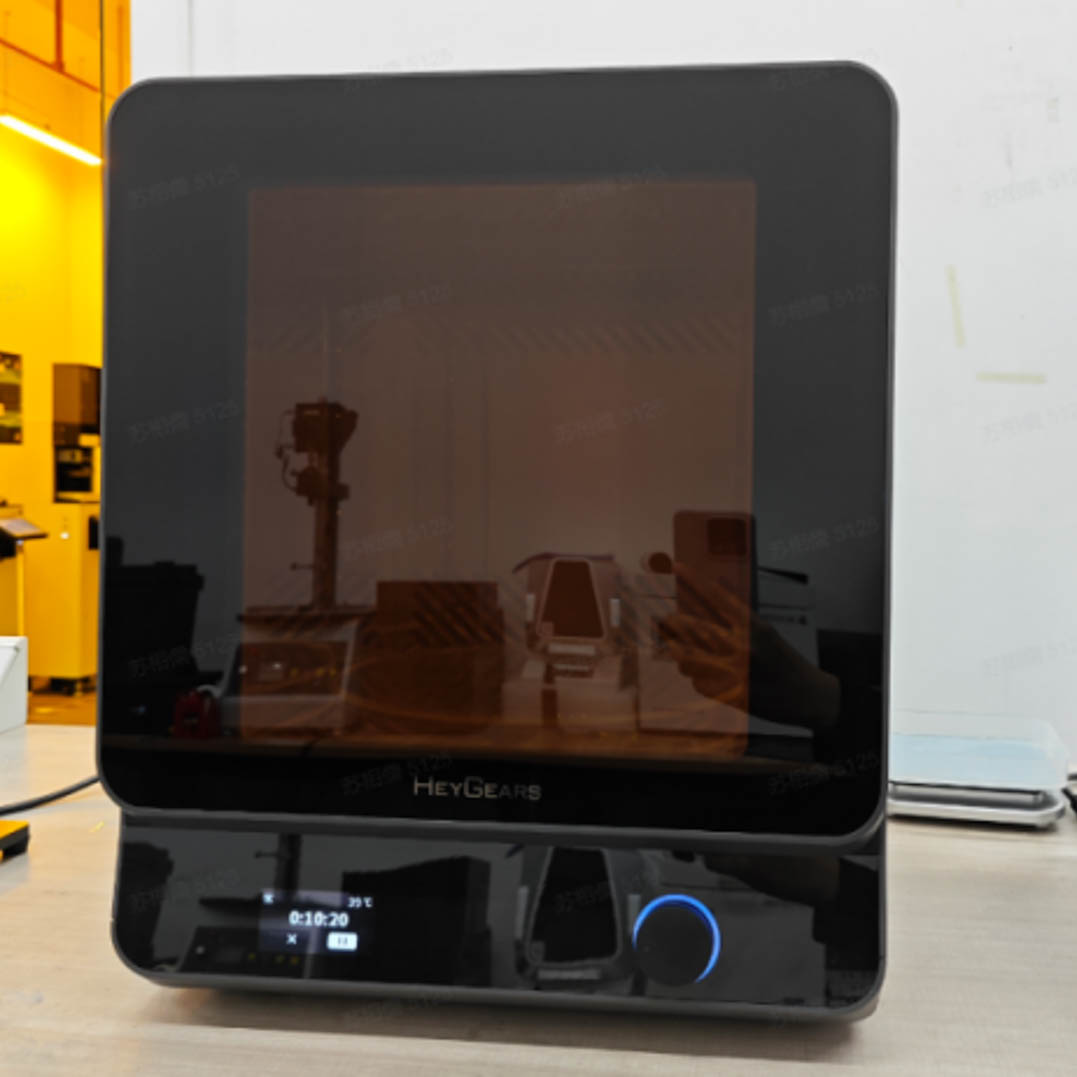
| Step 3: Washing. Set the washing settings on HeyGears UltraCraft Wash or in Blueprint platform and then send the washing job. | Step 4: Curing. Set the curing settings on HeyGears UltraCraft Cure or in Blueprint platform and then send the curing job. |
 |
 |
¶ 5. Post-processing
¶ 5.1 Remove Supports
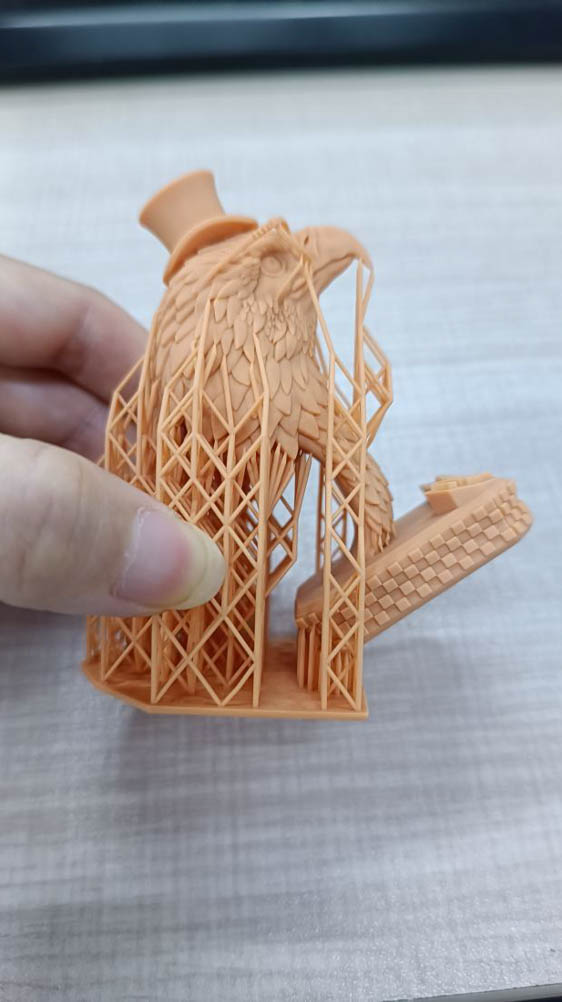
1. For most print models, removing by hand will be fine (twisting off the support structures);
 |
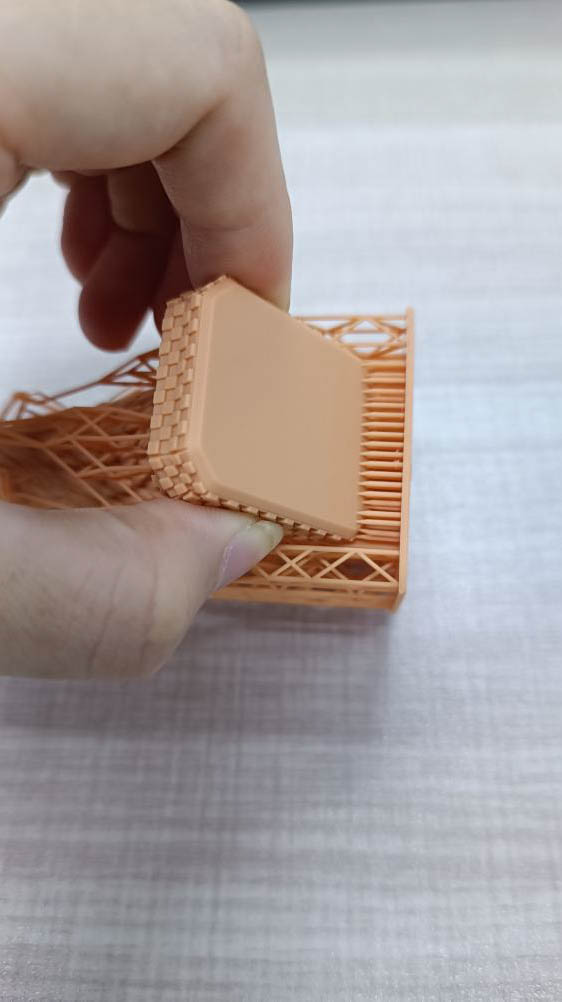 |
| Remove supports by hand | Result of removing supports by hand |
2. For models with thin wall, special support structures or supports generated at corners, it's better to remove supports with tools (pliers, art knife or tweezers).
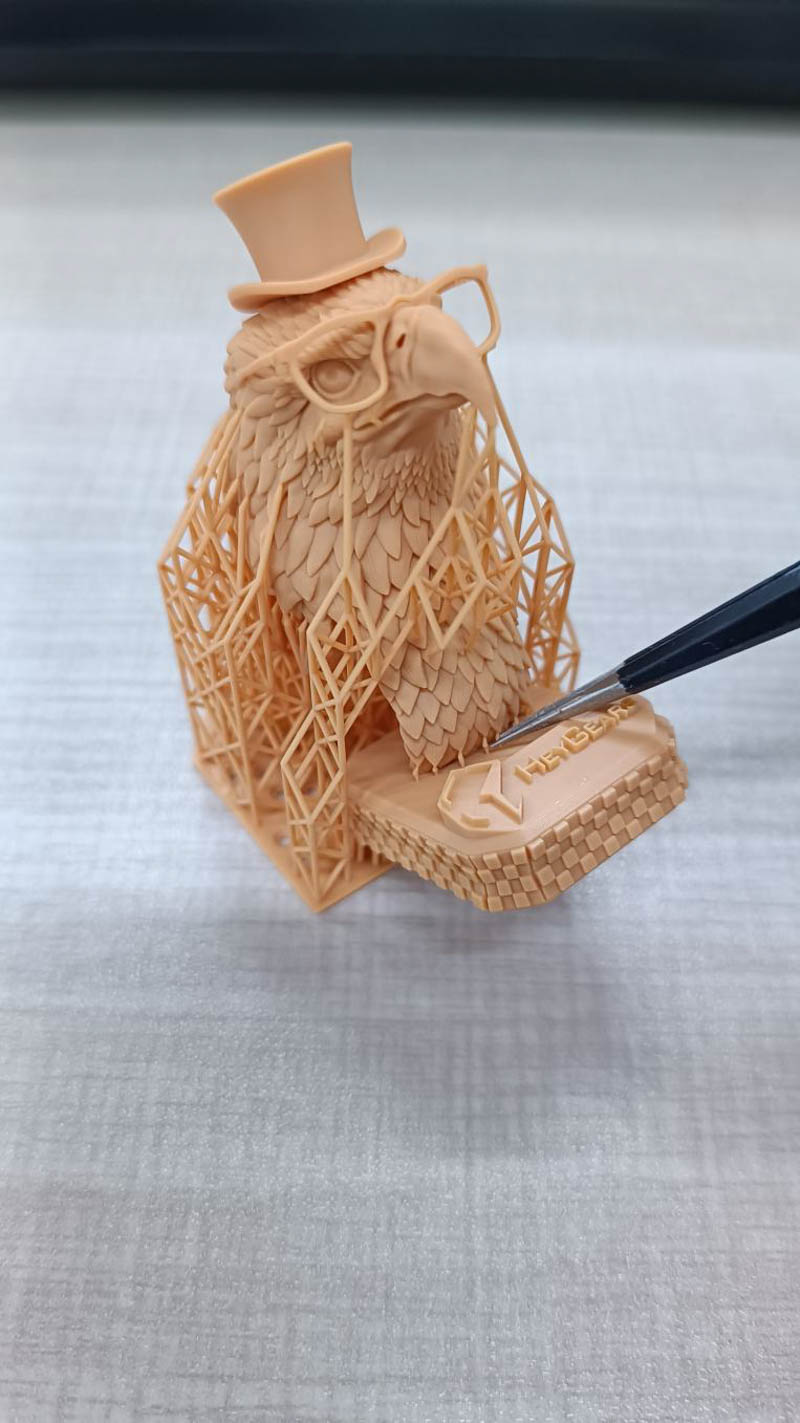
Remove supports with tweezers
¶ 5.2 Grinding and spraying
Grind off some support remains on printed models to make their surface smooth.
1.Grinding by hand
Use wet sandpaper (from 400 mesh to 1200 mesh) to grind off layer lines and support remains. It's advised to use sandpaper that is 200 mesh finer every time switching to finer sandpaper, and grind off scratches made by previous sandpaper. After grinding with 1200 mesh sandpaper, the surface of the print part will look fine and matte.
2.Washing
Wash off the dusts from grinding with water first. Wipe off the dusts and finger prints until clean with microfiber cloth and IPA/95% alcohol.
3.Another option: UV clear coat
UV clear coat needs to be cured with UV light. Some UV coat might turn 3D-printed objects more crispy, so it's advised to have some tests in advance.
¶ 5.3 Presentation of Finished Model
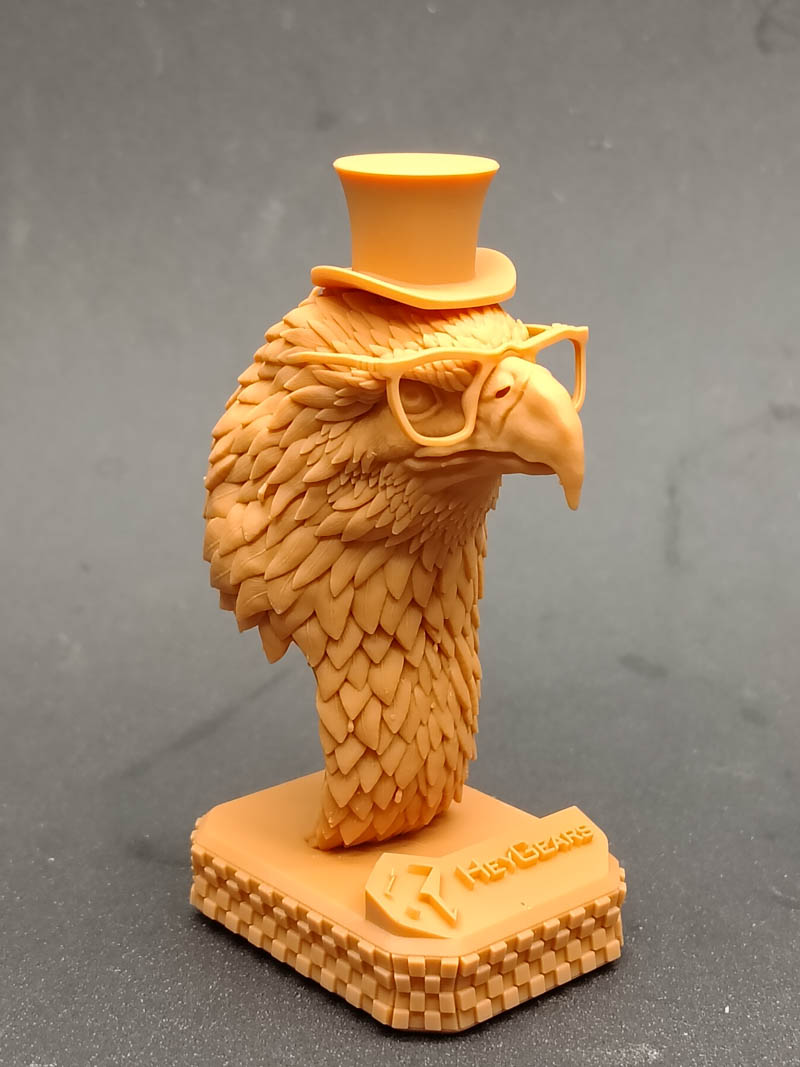
Image of a finished model
¶ 6. Precautions
¶ 6.1 Precautions and Warnings
1.Please make sure to keep on protective wear (protective gloves and goggles) during the process.
2.Please avoid direct contact with liquid resin or the print parts after curing, to prevent irritation to the eyes or skin (which might cause sensitization).
3.If the product gets into the eyes, rinse immediately with clean water and contact a doctor.
4.If the product contacts with your skin, rinse immediately with clean water and wash thoroughly with soap.
5.The product should only be used after training by qualified personnel.
6.After each use, please be sure to immediately close the bottle cap to keep the bottle sealed.
7.Before use, please shake the resin well and it’s recommended to stir the resin in the resin tank before printing, to ensure that there is no significant sediment of the color powder.
8.After pouring into the resin tank, the resin should be kept away from light. If not printed for 3 days, the resin should be filtered and poured back into the resin bottle, avoiding staying for more than 7 days in the resin tank to prevent moisture absorption and degradation, which could lead to print failures.
¶ 6.2 Storage and Transportation
1.The product should be stored in an indoor environment with a temperature of 15°C ~ 28°C, free from corrosive gases, well-ventilated, and protected from high temperatures, humidity, and direct sunlight.
2.The product should be transported in an environment with a temperature of 0°C ~ 45°C, and during transportation, it should be protected from heavy pressure, direct sunlight, and exposure to rain or snow.
3.The shelf life of the product is 18 months.
¶ 6.3 Disposal
Please refer to the MSDS for precise information. Liquid resin should not be directly discharged. Please allow it to be fully cured into a solid under sunlight before disposing of it according to local regulations.